
Passenger lifts and goods lifts are essential to the safe and efficient operation of many buildings, from apartment blocks and care homes to retail space and offices. It’s important that duty holders are aware that owning or operating these systems comes with clear legal responsibilities. If you’re unfamiliar with the legislation, you may be wondering: what does LOLER mean in practice? Under the Lifting Operations and Lifting Equipment Regulations 1998 (LOLER), duty holders must ensure all lifts are safe, properly maintained, and fully compliant at all times.
This article breaks down your key obligations, specifically for passenger and goods lifts, and explains how these regulations apply across both commercial and residential settings. 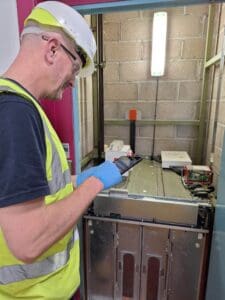
Does LOLER Apply to Your Lift?
If your business or organisation operates, the following lifts, then LOLER almost certainly applies:
- Passenger lifts: for staff, residents, or the public
- Goods lifts: including service lifts or mezzanine lifts
The regulation places duties on anyone who owns, manages, or controls lifting equipment in the workplace, not just the installer or manufacturer. Even if your lift was supplied and maintained by a third party, you remain legally responsible for compliance.
1. A Regular LOLER Examination Is Mandatory
The most critical LOLER requirement for lifts is thorough examination.
For lift systems:
- Passenger lifts: every 6 months – if your lift carries people, even occasionally, then it falls under the strict 6‑month requirement
- Goods lifts: typically every 12 months (or as specified in a written examination scheme)
A LOLER lift inspection must be carried out by a competent, independent person, and endorsed by a formal written report.
2. You Must Keep Lift Records and Reports
LOLER requires clear and accurate documentation, including:
- Thorough examination reports
- Maintenance and servicing records
- Details of defects and repairs
These must be retained and available for inspection.
A well-maintained compliance record is essential for audits, insurers, and HSE inspections.
3. Ensure Lifts Are Safe and Suitable for Use
You must ensure your lifts are:
- Fit for purpose
- Used within their safe limits
- Correctly installed and operated
Each lift must display its Safe Working Load (SWL) and any usage restrictions. For example, goods lifts must never be used to transport people unless designed to do so.
4. Maintain Lifts in Safe Working Condition
Routine servicing is essential to meet LOLER duties.
You must:
- Ensure lifts are routinely maintained
- Address faults promptly
- Remove unsafe equipment from service
LOLER requires equipment to be safe at all times, not just during inspections.
5. Plan for Safe Lift Operation
LOLER requires that lifting operations are:
- Properly planned
- Safely carried out
- Appropriately supervised
For lifts, this includes:
- Safe passenger use
- Controlled access where needed
- Clear operating procedures
6. Provide Training and Clear Instructions
Anyone responsible for using or managing lifts must be:
- Competent and trained
- Aware of load limits and restrictions
- Able to identify and report faults
7. Act Immediately on Defects
If a serious defect is identified during a LOLER inspection:
- The lift may need to be taken out of service
- Repairs must be carried out without delay
- The lift must be made safe before reuse
How Does LOLER Apply to Apartment Blocks and Lifts in Communal Areas?
This is one of the most common areas of confusion.
The Key Point: “Use at Work”
LOLER is primarily a workplace regulation. It technically applies when lifts are used by people at work. In residential apartment buildings, this creates a grey area, but in practice most communal lifts will fall under LOLER.
Why Communal Lifts Are Usually Covered
Even in residential blocks, lifts are rarely “purely domestic.” They are typically used by:
- Cleaners and caretakers
- Maintenance contractors and engineers
- Managing agents and building staff
This connection to work activity brings lifts within scope. [legislation.gov.uk]
As a result, communal passenger lifts are almost always treated as LOLER-applicable.
Who Is Responsible?
For communal lifts, the duty holder is usually:
- The freeholder / landlord
- Or the managing agent acting on their behalf
They are responsible because they control the lift and communal areas, not the residents.
What If LOLER Doesn’t Strictly Apply?
In rare cases, when a lift is not classed as “used at work,” there is still a legal obligation under the Health and Safety at Work Act to protect residents and visitors.
The HSE makes it clear that:
A level of inspection and maintenance similar to LOLER is typically considered ‘reasonably practicable.’
In simple terms:
Even if LOLER doesn’t strictly apply, you are still expected to follow its principles.
The Practical Reality
Across the industry, communal lifts in apartment blocks are treated the same standards expected under LOLER regulations, including:
- 6‑monthly thorough examinations
- Ongoing servicing and maintenance
- Full compliance documentation
This is driven by:
- Legal duty of care
- Insurance requirements
- Risk management best practice
The Risks of Non-Compliance
Failure to meet LOLER compliance requirements can lead to:
- Fines and enforcement action
- Lift shutdowns and operational disruption
- Increased liability in the event of incidents
Most importantly it puts users, whether that’s employees, residents, or visitors, at risk.
How Ideal Lifts Can Support You
At Ideal Lifts, we help customers stay fully compliant with:
- LOLER thorough examinations
- Preventative maintenance programmes
- Expert compliance guidance
- Rapid response repair services
Final Thoughts
Whether in a commercial building or a residential apartment block, passenger and goods lifts carry significant responsibility. LOLER makes it clear: if you own, manage, or control a lift, you are accountable for keeping it safe.
By staying on top of inspections, maintenance, and documentation, and understanding how the rules apply in your specific setting, you can ensure ongoing compliance and complete peace of mind.
Need help with your lift compliance?
Contact Ideal Lifts today to keep your passenger and goods lifts safe, compliant, and operating at their best.