
Getting stuck in a lift can be an unsettling experience. While modern lifts are designed with multiple safety systems and being trapped is rarely a dangerous situation, it can still cause anxiety for passengers and create a challenge for those responsible for the building.
Whether you’re a lift user, facilities manager, managing agent, landlord or duty holder, knowing what to do during a lift entrapment can help ensure a safe and efficient outcome. In this guide, we’ll explain the correct procedures for passengers, the responsibilities of building managers, and how simple measures such as clear passenger information and emergency release training can make a significant difference.
© Stokkete / Shutterstock
If You’re Trapped in a Lift: Stay Calm
The most important thing to remember is that, whilst being trapped in a lift can be unsettling, situations where passengers are genuinely in danger are extremely rare.
Modern passenger lifts incorporate numerous safety devices designed to prevent uncontrolled movement. In many cases, a lift will stop because a safety system has detected an issue and safely removed the lift from service until it can be inspected and repaired.
Although being confined in a lift can feel uncomfortable, passengers are usually safest remaining inside the lift car and following the established emergency procedures.
What Passengers Should Do
Use the Emergency Alarm or Autodialler
All passenger lifts should be fitted with a functional alarm button, and most also include a two-way communication system or autodialler.
Press the alarm button and follow any instructions provided. This should connect you to a monitoring centre, building representative or lift maintenance provider who can arrange assistance.
If contact is established, be prepared to provide:
- Your location, and any identifiers available visible inside the lift such as the serial number
- The number of people in the lift
- Any medical concerns
- Any information that may help responders assess the situation, e.g. which floor were you travelling from and to
Remain Inside the Lift
Passengers should never attempt to force open the lift doors or climb out without assistance.
Even if the doors can be partially opened, the lift may not be level with the landing, creating a potential hazard. The safest option is to remain inside the lift and await assistance.
Use Your Mobile Phone as a Backup
If you have mobile signal, you may wish to contact building management or a colleague. However, the lift’s emergency communication system operates under battery-backup conditions and should always be your primary method of raising the alarm.
Reassure Other Passengers
Remaining calm can help reduce anxiety for everyone involved. If others are trapped with you, reassuring them that help is being arranged can make the situation far less stressful.
Why Clear Passenger Instructions Matter
One of the biggest causes of panic during a lift entrapment is simply not knowing what to do.
Clear instructions inside the lift can help passengers understand:
- How to call for assistance
- What will happen next
- Who they are speaking to
- Why they should remain inside the lift
- That help is on the way
Providing this information not only improves the passenger experience but can also help prevent unnecessary panic and inappropriate attempts to leave the lift without assistance.
Bespoke Trapped Passenger Notices from Ideal Lifts
At Ideal Lifts, we recommend fitting a dedicated in-car notice advising lift users of the procedure for calling for assistance.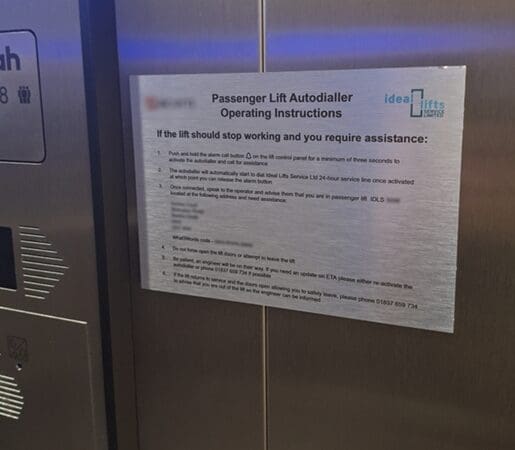
We can supply and install a heavy-duty brushed stainless steel notice providing clear autodialler instructions and reassurance for trapped passengers. These bespoke notices can include both your company logo and the Ideal Lifts logo, creating a professional and site-specific solution.
Following acceptance of an order, our graphic designer will prepare a bespoke design for approval before manufacture, ensuring the finished notice is tailored exactly to match your building and lift requirements.
Clear, professionally presented instructions can provide reassurance at exactly the moment passengers need it most.
What Building Owners / Managers Should Have in Place
Building owners and managers should ensure suitable arrangements exist long before an entrapment occurs.
Key measures include:
- A fully functional alarm and emergency communication system within the lift
- Regular lift maintenance and testing of lift equipment
- Clearly documented passenger rescue procedures
- Access to a competent lift maintenance provider
- Clear information for lift users in the event of a breakdown
Taking a proactive approach can reduce disruption, improve passenger confidence and ensure assistance can be provided as quickly as possible.
Emergency Release Training: Creating Effective First Responders
Many organisations choose to have nominated personnel trained in lift emergency release procedures so they can act as effective first responders where appropriate.
Emergency release training equips authorised personnel with the knowledge and practical skills required to safely carry out controlled passenger releases on specific lift installations.
Training typically covers: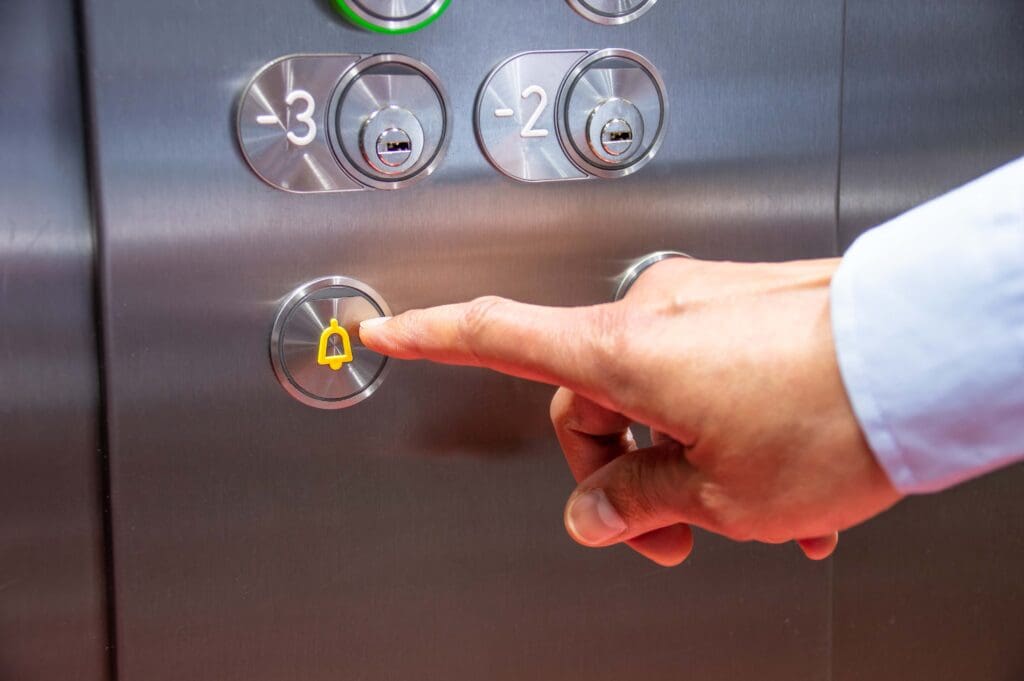
- Safe isolation procedures
- Knowledge of lift safety systems
- Site-specific rescue procedures
- Communication with trapped passengers
- Situations where a passenger release should and should not be attempted
Having trained personnel available can often reduce passenger waiting times and provide reassurance that assistance is immediately available on site while a lift engineer is travelling to attend.
At Ideal Lifts, we offer emergency release training for authorised personnel, helping customers create a safe and effective first-response capability whilst ensuring rescues are carried out in accordance with industry best practice.
When Should the Fire Brigade Be Called?
A common misconception is that the Fire and Rescue Service should be the first call whenever somebody becomes stuck in a lift.
London Fire Brigade states that it is not required to attend incidents where a person is trapped in a lift without immediate physical or medical danger. The Brigade advises building and lift owners to maintain suitable lift release arrangements, provide effective communication facilities within lifts, and ensure a 24-hour lift release service is available. [london-fire.gov.uk]
Where passengers are safe, uninjured and able to communicate, the most appropriate response will usually be through the building’s established rescue arrangements, whether that involves trained on-site personnel or a lift maintenance provider.
Of course, if a passenger is suffering a medical emergency, is particularly vulnerable, or there are circumstances that place them at immediate risk, the emergency services should be contacted without delay.
Building managers should also be aware that some fire services may recover costs for repeated non-emergency lift rescues. London Fire Brigade operates a charging scheme under which costs may be recovered when firefighters attend three or more non-emergency lift incidents at the same building within a 12-month period.
This policy was introduced to help reduce unnecessary call-outs and encourage building owners to maintain appropriate rescue arrangements rather than relying on emergency services for routine lift releases.
Final Thoughts
Lift entrapments are uncommon, but every building that operates passenger lifts should have a clear plan for dealing with them.
If you’re stuck in a lift, the message is simple: stay calm, use the emergency communication system and wait for assistance.
For building managers, preparation is key. Reliable emergency communications, clear trapped passenger instructions, effective maintenance arrangements and appropriately trained personnel can all contribute to a faster, safer and less stressful resolution.
At Ideal Lifts, we can assist with lift maintenance, emergency communication systems, bespoke trapped passenger notices and emergency release training to help ensure your building is prepared when it matters most. Contact our team to discuss the most suitable solution for your lifts.